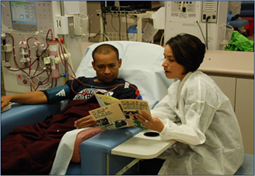
By Anne Osuji, Research Associate & Jessica Nunez, Intern Access to Transplant Education is Unequal There are more than 700,000 Americans with kidneys that can no longer support the needs of the body to remove waste and excess fluid; they have End-Stage Kidney Disease (ESKD).1 Patients with ESKD must either receive frequent dialysis or receive a kidney transplant from a deceased or living donor in order to stay alive. Because waiting for a kidney from …
QIP changes are coming in 2020: Is your dialysis center ready? The Kidney Transplant Toolkit can help
For Professionals in Nephrology, Dialysis, and Transplant: A discussion of CMS ESRD QIP changes that could impact your funding and the Toolkit that will help you be ready CMS requires dialysis centers to increase patients wait-listed for transplant Earlier this year, the Centers for Medicare and Medicaid Services (CMS) announced that, as part of its ESRD Quality Incentive Program (QIP) starting January 1, 2020, dialysis facilities will be required to report their Percentage of Prevalent …
$1.2 million HRSA grant furthering TREC’s research in paired donation
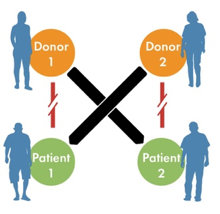
It’s one of the frustrations of the kidney shortage that many people want to donate a kidney to a loved one but can’t, because their blood type is not compatible with their intended recipient. If they donated, their kidney would be rejected. In the past, living donors who did not match their recipients simply couldn’t donate at all. The failure to realize those donations was – and is – a true loss of potential kidneys …
- Page 2 of 2
- 1
- 2